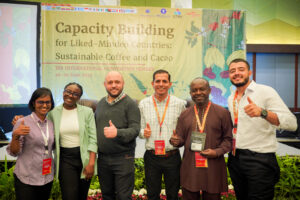
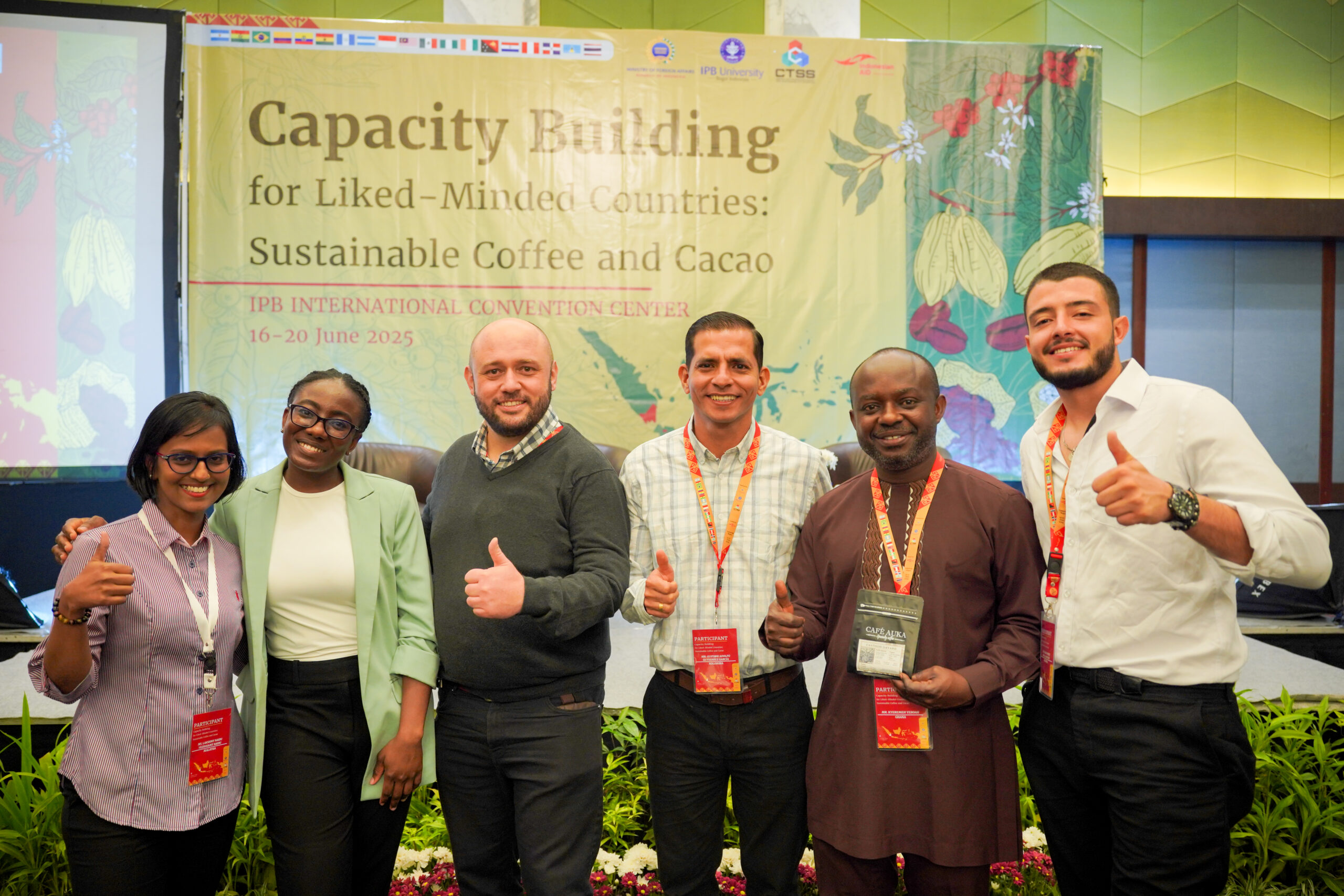
The Government of Indonesia and IPB University has initiated the Capacity Building for LMCs: Sustainable Agriculture Program, a multi-year initiative implemented from 2024 to 2027. This program is designed as a structured and progressive learning platform that responds to the diverse needs and priorities of LMCs member countries, while fostering shared understanding and collective action toward sustainability.
See documentary video of Capacity Building for Like-Minded Coutries: Sustainable Coffee and Cacao
Each year of the program is dedicated to a specific strategic commodity, reflecting both its global importance and its relevance to sustainable development challenges. The focus commodities include palm oil, coffee and cocoa, timber, and rubber. By concentrating on one commodity per year, the program enables in-depth exploration of sustainability issues along the entire value chain, from production and landscape management to processing, trade, and policy frameworks.
The capacity-building activities encompass a range of formats, including training workshops, expert-led lectures, policy discussions, field-based learning, and peer-to-peer exchanges among LMCs members. Participants are exposed to scientific knowledge, policy instruments, and practical experiences that support the adoption of sustainable practices, such as climate-resilient production systems, biodiversity conservation, traceability mechanisms, and inclusive smallholder engagement.
Beyond technical skill development, the program also seeks to strengthen institutional and policy capacities. By facilitating dialogue between policymakers, researchers, practitioners, and industry representatives, the initiative encourages cross-sectoral collaboration and supports evidence-based decision-making. This approach ensures that sustainability principles are not only implemented at the field level but are also embedded within national strategies and regional cooperation frameworks.
Through the Capacity Building for LMCs program, Indonesia contributes to the long-term goal of building a shared foundation of knowledge, trust, and expertise among LMCs members. Ultimately, this initiative reinforces the collective ability of member countries to advance sustainable agriculture, respond to global market demands, and engage more effectively in international sustainability discourse.