
Abstract
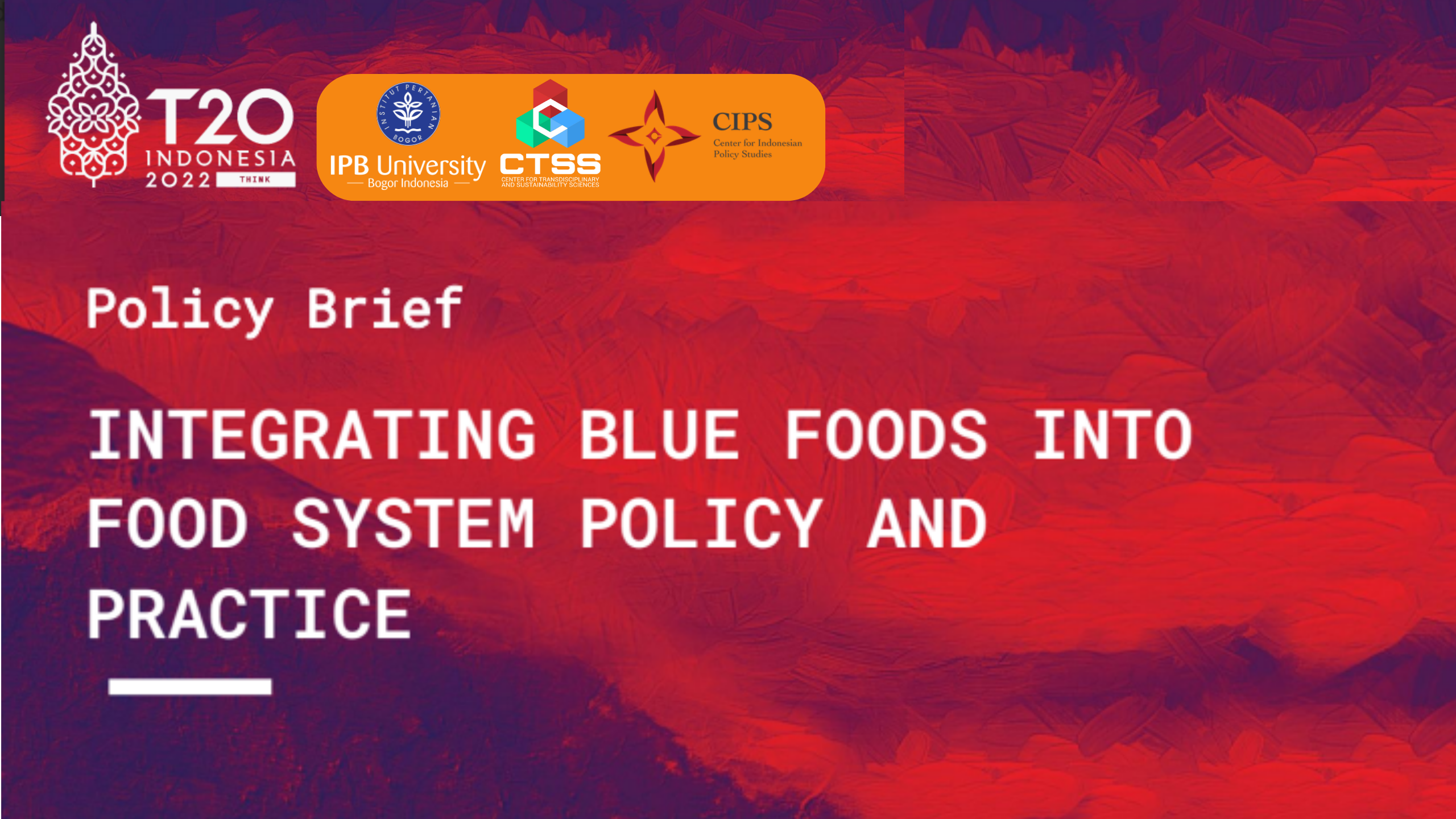
Blue foods – fish, shellfish, algae and plants cultivated and captured in freshwater and marine environments – are highly diverse, are rich in protein, essential micronutrients and fatty acids, and can offer sustainable alternatives to many terrestrial animal-source foods. Two-thirds of blue foods destined for human consumption are produced by small-scale fisheries and aquaculture. Thoughtful investments and policies that foster a thriving, regenerative blue food sector could help solve some of the most pressing challenges facing the world today.
This brief recommends that the G20: (i) Manage blue foods as an integral part of food systems; (ii) Identify and reform policies and practices that impede transformation; (iii) Protect and harness diversity for nutrition, accessibility and environmental sustainability; (iv) Recognize and support the central role of small-scale actors; and (v) Commit to human rights in policy and practice. It provides on-the-ground examples from blue food systems in Indonesia to highlight best practices and success stories.
Baca selengkapya di sini: https://drive.google.com/file/d/194dCTjV7dwsBYPR4KGFA-FxFM1N5OHL4/view?usp=drive_link